Monday, November 11, 2024

The Hidden Hand or Capitola the Madcap by E.D.E.N. Southworth

FLAMES AND FURIES!

Get ready for hundreds of pages of exclamations, ejaculations, and interjections! But really, there is a lot of ejaculating in this book. 

The Hidden Hand was originally published in the 1850s in serialized form, but later published as a book in 1888. This is an overly dramatic, noir-styled, mustachioed twirling romp in which the characters only seem to speak in all caps and exclamation points. And to give you a feel of the writing, I will be ejaculating several times throughout this review.

HOITY TOITY!

The book is named for Capitola, our brave and bold heroine. She is independent and bucks societal norms. And by page 100, I was thinking we hadn't heard much about her.

PISH! TUSH! PSHAW!

The book is also about an old curmudgeony man who adopts Capitola after learning of her from a woman on her deathbed. 

HORRIBLE HORRIBLE! 

And we learn about several others whose lives are so intermingled you might need a venn diagram to parse them out, but it all comes together in the end, if only because of a series of strange coincidences.

POOH POOH, NONSENSE!

There are of course villians, soliloquies, and plenty of humphs. 

HEAVEN OF HEAVENS NO!

And if you are short on how to describe people, this is your book.

YOU ARE A PERFECT DRAGON! A GRIFFIN! A RUSSIAN BEAR! A BENGAL TIGER! A NUMIDIAN LION!

Despite the constant ejaculating and age of the story, it was surprisingly easy to read. But after reading over 300 pages, I think it's safe to say, this is not my genre. While I'm proud of myself for finishing it and reading something completely out of my wheelhouse, I'm not sure this is a book I'd recommend given all the other options out there. 

Saturday, November 9, 2024

Circe by Madeline Miller


Whether or not you know anything about Greek Mythology is irrelevant when it comes to reading Circe. You could go in cold, like I did, or with a vast knowledge of the myths.  

If, like me, you thought of Greek myths as being about otherwordly beings who have little in common with mortals, you may be pleasantly surprised by this book. Miller makes the gods human, accessible, fallible, and vulnerable. And I guess anyone who knows anything about these stories might already know that, but I didn't. 

Circe is the daughter of Helios, who is the Sun God. She lives in a house occupied by many nymphs, or cousins, essentially. Although there are many things that are unusual about her upbringing (she is a goddess, after all), she also faces many things normal people face - mean siblings, crushes, jealousy. Circe grows up, not really having any indication that there is anything unusual about her, besides her upbringing and place in society. If she loves a mortal who is poor, for instance, she can go to a powerful relative on his behalf to better his life, but she seems unable to do much on her own. Yet Circe dabbles in the power of farmacia, mixing herbs into potions, and soon realizes strange things happen when she does.

Circe's creative use of farmacia eventually results in her forced isolation on an uninhabited island, Aiea. It is here she develops her skills in witchcraft, making potions and salves to cater to various needs that arise. She develops a skill for transformations, and has wolves and lions as her companions. She occasionally has visitors, like Hermes, who give her company and news of the outside world. She also hosts lost and seaworn sailors who land on her island, most notably the warrior Oedipus, who tells stories of the Trojan war and his conquests. She is even given a reprieve from her solitude when her sister Pasiphae summons Circe to help Pasiphae give birth to a son, who eventually becomes the minotaur.

I didn't realize how many of these stories I knew, at least peripherally. I also didn't realize how intertwined all these stories were. What I like about Circe is how Miller seamlessly relates all these tales in this one narrative. And throughout all these stories, we learn a bit about what it is like to be immortal and how immortal beings view mortal ones - as brief interruptions in their greater world. She also did a great job showing the gods and titans as beings who, despite their immortality, are just as petty, if not more so, than mortals. She really brings the drama of the gods and titans to this book like a great soap opera that's been running for centuries.

But unlike a soap opera, the writing is beautiful, almost wistful at times. Circe, although much maligned (it seems) is relatable and you want her to succeed in everything she does. She is a goddess who started out as a nymph and toiled to greatness, despite her solitude. In fact, she might have made the best bottle of wine from those sour grapes and we get to enjoy it with her in this beautifully told story.

Monday, October 28, 2024

Scenes of the Crime by Jilly Gagnon


This is a classic beach or vacation read, with I Know What You Did Last Summer vibes but. You know, I say that, but I haven't read that actual book. I might have watched the movie a looooong time ago though.

Ok, there are major differences probably. But we have a group of friends, including Emily, who lost their friend Vanessa one fateful night at her family winery conveniently high up on a treacherous ocean cliff. At Emily's suggestion, several years later, the friends reunite. 

Emily's motives aren't completely benevolent. Sure, she wants closure, which she doesn't feel she has, especially since she thinks she saw Vanessa recently at a coffee shop. But as a way of dealing with the tragedy, Emily, who is a writer for a popular sitcom, is also working on a manuscript of the fateful weekend. But, and this may surprise you, Emily's recollection of the events might not be entirely accurate. And she thinks her friends might be able to fill in some of the details. So she needs to get everyone together to figure out what happened...and to finish her manuscript, which, by the way, we have the pleasure of reading as a stand in for some of the chapters. I guess it's a variation of the multiple perspective narrative trope. 

But these women weren't really all that close, it seems. And besides not being the best of friends, they're not the most likeable either. So when they spend a weekend reuniting, you also get to experience the "ugh, I don't really like these people, why am I spending a weekend with them?" vibe. 

But don't get me wrong, it's not terrible, but it's not super memorable either. It's one of those books that you read when you want a light thriller to pass the time. At least we spend this weekend in a high-end winery in a quaint town and are oft encouraged to relax and enjoy a glass. And while it's not essential to get through the book, it might take the edge off and help pass the time. 


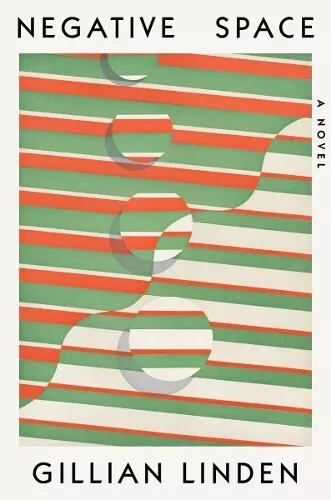
Negative Space by Gillian Linden


"No one is suggesting anyone should react to anything in any particular way."

I think that is the guiding principle of many people who, whether they realize it or not, end up showing tolerance and ambivalence at the same time. And it sums up how I felt about this book.

When I first started listening to this book, I thought the narrator was a teenager. She is timid, insecure, anxious, questioning of every little thing around her. I soon realized she is a teacher at the school, not a student. And listening to her thoughts is so irritating at times, I wasn't surprised when her own daughter commented she wished some random woman was her mother. Just a casual example of how little her own family regards her.

This woman, who isn't even of consequence enough to have a name, seems like the kind of person who walks around with a frown and perpetually furrowed brow. Even her peers treat her like a child in need of  placation. Thankfully, we are only spared to walk in her shoes for a week. And nothing is resolved, but I get the feeling that's the point. She constantly questions and worries about everything while the world goes on around her.  

I'm not sure I get this book. It's a quick read and handles interesting topics, like post-pandemic life, specifically in a school setting. There is also the question of possible inappropriate advances from a teacher to a student. And we have issues with anxiety and what life can be like for someone who suffers from it.

But the story unfolds in such an undramatic way, I was surprised when it ended, but also a little relieved that I didn't have to endure this person's company anymore. While I can't say I regret reading Negative Space, I'm not sure I'd recommend it either.

Saturday, September 28, 2024

The Ballad of Songbirds and Snakes by Suzanne Collins

Did you know Panem was pronounced "PAN-EM?" I sure didn't. You emphasize both syllables apparently. That's a benefit of listening to the audio book. But you know what might not be a benefit of an audiobook? Hearing a man trying to do female voices. 

Now, I'll admit that I listen to audio books at a fast pace, which obviously affects the vibe. But I couldn't help think that the females in this book sounded like female South Park characters. And it gets worse when some of those characters sing. To be fair, the narrator doesn't actually sing but listening to him quote the lyrics of songs while doing a female South Park impersonation is...strange. Suffice to say, I wasn't moved by any of the lyrics and I wonder if the experience would have been different if I were just reading them myself. 

I don't know, I feel like the lyrics to a lot of the songs sounded...basic. But honestly that's probably true of a lot of great songs. If you want to judge for yourself, you can hear all the songs on The Hunger Games website. I'm going to have to check that out as well as the movie.

Things I liked: There was a hunger games, but that wasn't what the whole book was about. We get an understanding of how the Hunger Games got to where they are once the Trilogy starts. I also hated Dr. Gaul, but in the way you love hating something. I also liked the lore about the Jabberjays and Mockingjays.

Things I didn't like: Pretty much any scene with a song. It seemed strange that Lucy Gray would perform on stage after being selected for the reaping. I get it in terms of her character and the plot and blah blah blah. But it just didn't resonate with me. It was not a realistic reaction or one that really solicited sympathy for her situation. But maybe I'm missing the point.

I also didn't like the idea of the Covey - a nomadic group without a real district to call home. That diluted the impact of the reaping for me. It seemed like Collins was trying to distance the Covey from the districts, almost to the point of saying they didn't deserve to be a part of the reaping. But is that to then say that people from the districts did?

And while the book is mostly about Cornelius Snow, I don't feel we really got to know him as a person. Sure, we learn about his family history and his actions and thoughts about things, but he still seemed two dimensional to me. I'm not sure if I was supposed to like him or not, but I was kind of ambivalent. There weren't many characters I liked, not even Lucy Gray. 

It's interesting in terms of getting background on the hunger games and Panem. But it's probably my least favorite of the series. And I would suggest reading the book, not listening to it. 

Sunday, September 22, 2024

The Girl with All the Gifts by M. R. Carey

This is a book best discovered blind, without knowing the plot or even genre. But if you already know, or don't mind mild spoilers, read ahead. 

"That's Pandora...she was a really amazing woman. All the gods had blessed her and given her gifts. that's what her name means, the girl with all the gifts. So she was clever and brave and beautiful and funny, and everything else you'd want to be. But she just had the one tiny fault, which was that she was very, and I mean very, curious."

This is a book that, on its face, is about an apocalypse. But it's also about well-meaning people who make mistakes. Is there a pandemic? Yeah. Is there a quest to find a cure? Of course. Are there great explanations for its cause and future prognosis? Yup.  

But what I like are the characters, and the fact that there aren't really good guys or bad guys. While there are those who seem like they fit one category or the other, Carey blurs those lines and gives her characters more dimension as you get further in. 

"The infection was bad...so were the things that the important decision people did to control the infection, And so was catching little children and cutting 'em into pieces. Even if you're doing it to try to make medicine that stops people being hungries. It's not just Pandora who had that inescapable flaw. It seems like everyone has been built in a way that sometimes makes them do wrong and stupid things."

Much like Pandora, whose legacy is really maligned, Carey describes her as a gifted, wonderful person, with just a tiny flaw. But aren't we all like that? And the more I thought about it, the more I realized Carey isn't just making this comparison to one character. I saw Pandora in a lot of her characters. She has many who are gifted in their own way with their own flaws that, some would argue, are worse than others. How will each be remembered? What is their legacy? And I think whether the legacy is good or bad depends on who survives the apocolypse that has unfolded.

It's a thought provoking read and also just a really great story. There is also a movie that is pretty good as well, but barely scratches the surface when it comes to covering what is in the book. There is also a prequel, The Boy on the Bridge that came later. Might be worth checking out.

Saturday, September 21, 2024

The Invisible Life of Addie Laroux by V. E. Schwab

Addie Laroux was born in the 1690's in France. Paradoxically, her very normal life led her to the most abnormal of circumstances. Facing the shackles of marriage and domestic county life, Addie ran into the woods and prayed for her freedom. In her haste, she appealed to whichever god would listen. But in her desperation, she also prayed after the sun went down, and forgot a warning to never pray to the gods who answer after dark.

And it was Luc who answered. Make no mistake, while Luc often took the seductive form of Addie's sketches of an unknown lover, Luc was no mortal. And it wasn't in benevolence he answered Addie's prayer. He required a contract from her. So Addie agrees to submit to Luc when she no longer desires the freedom he will grant her. And she does live in freedom, which includes the possibility of immortality, but also the curse that no one will ever remember her.

The logistics of this curse are very complicated. Addie can meet the same people over and over again because they don't remember her once they turn away from her. Her family doesn't recognize her anymore, and intimate relationships last only as long as the other person stays awake. Addie isn't able to own anything, partially due to landlords not remembering renting her rooms, but also due to the curse - she loses anything she acquires. Even worse, she cannot say her name or write or draw anymore. It seems she cannot leave a permanent mark on the world.

But Addie finds ways to do this. Whether it's in a song that haunts a musician, or paintings of an unknown girl by an artist, Addie indelibly leaves a mark, as distinct as the constellation-like pattern of freckles on her face. 

Through the years, Addie is visited by Luc, who tempts her to end their deal. Like a true devil in disguise, he is both seductive and horrifying, and beautifully written. Any scene with Luc is intoxicating and you quickly understand how Addie hates Luc, but also is drawn to him nonetheless. 

By the time Addie meets Henry, in New York, about 300 years later, she has learned how to adapt to her circumstances. She finds places to stay each night, sometimes even with a companion, and because no one remembers her, she is able to steal almost everything she needs. So imagine her surprise when one day, she returns to a bookstore Henry works at and he remembers that she stole a book the day before.

Is it a glitch? What makes Henry so different from the multitude of people Addie has met over the last 300 years around the world? And what will Luc think about this turn of events?

This is a great book on its own, but I listened to the audio book and loved Julia Whelan's narration. She brought the characters to life and took an amazing story and made it even better. The writing has a lyrical quality that can make you feel like your're dreaming or caught in a bitter nightmare. A definite recommend.