Showing posts with label Young Adult Fiction. Show all posts

Saturday, November 16, 2024

Mislaid in Parts Half-Known by Seanan McGuire


This is book nine in the Wayward Children Series, a series of books about children who have found portals into alternate worlds that can be the stuff of nightmares or dreams, depending on the child. 

A good thing about this series is that you could probably read the books out of order, since they deal with different children and worlds. But there are recurring characters and themes throughout, which might be lost by going out of order.

This book is about Antsy, who has a knack for finding lost things, which, as you can imagine, may include doors to secret worlds. Antsy finds herself and a group of friends, including a land-bound mermaid, a boy from a skeleton world, and a girl who died in a previous book, on a quest. They jump from door to door in order to avoid the wrath of Sarafina, a student with the ability to make people do anything for her. 

Eventually they land in Antsy's world, where lost things go. It's a nexus world, with a store for travelers. She worked at the Store of Lost Things, where people can open a multitude of doors and explore different worlds. In her case, Antsy used the doors for trips to buy supplies or opened doors for her employer to make visits to other worlds. Antsy eventually learned with every door opened, there is a cost, and she wants to hold the store owner accountable for not telling kids what that cost is.

This lore about the doors is interesting because it applies to all the books. We also get to see multiple worlds, including Prism, which is Cade's world, that he doesn't like to talk about (although I don't think this book does much to help in that understanding). While this is a great overall book for the series, with a lot of relevant information, I found it meandering in execution.

Once again, I am torn about these books. I know I'm not their target audience, as the series skews younger. But I appreciate the concept. The books are so short, however, you don't get a lot of world-building. And they deal with heavy topics like death, sexuality, and belonging in such short packages, that sometimes I feel it's not enough to really dig in. But I also am not engaged enough to want a longer book. I keep picking them up thinking, "this will be the one I truly love" and it hasn't happened yet. But I think they're great for junior high or high schoolers because they are so short and sweet, but still heavily packed with relevant topics.

So while I keep feeling meh about these books, there's something that keeps me coming back because they are so creative, if not fully fleshed out. 

Wednesday, January 31, 2024

Speak by Laurie Halse Anderson

"Your words are kindling, twigs covered in wax, soaked in lamp oil, sticky with tar. Your breath is a match, scratching along sandpaper... Whisper break the silence, one word, then two...with every word spoken a loud victory. The words burst into flames, the silence, broken."

This imagery from the novel's foreward was so powerful and poetic, and the story hadn't even started yet! But what a great story it is, and beautifully told - even though one doesn't think of freshman year of high school as an ideal setting. And for Melinda Sordino, it certainly isn't. The summer before high school, Melinda's life changed when she was raped at a party. She called the police for help, but couldn't find the words to describe what happened. Her silence did nothing to dispel rumors that she ratted on the party. Melinda grew deeper into depression and isolation as the year progressed, barely able to speak more than the minimum to interact with others. 

Melinda's world around her slowly falls apart, a symptom of the inner turmoil she faces. Her friends, new and old, abandon her. Her relationship with her parents is strained. And her grades suffer, except in art class, where she is tasked with a project based on a randomly chosen object, a tree.

Besides all of this, Melinda still experiences the usual high school dramas: finding a place to belong, making friends, keeping friends, and what activities to participate in. And the story is told from Melinda's perspective in short, aptly-titled segments that focus on different aspects of her life and the life many of us have faced in those formative years. 

Besides being an accessible, easy to read story, there were also a lot of symbolic nuggets that were fun to discover, including an ironic high school classroom discussion about symbolism in Nathaniel Hawthorne's The Scarlet Letter. One student defiantly declared that authors don't use symbolism, at least in the way the high school teacher believed (I remember having a similar conversation about The Great Gatsby!), and the class was quickly assigned an essay on the use of Hawthorne's symbolism. "That's what you get for speaking up" laments Melinda, a further reinforcement of the benefits of silence. 

Although afraid to speak and interact with others, Melinda still has a clear voice in the novel. She's a great narrator and you'll root for her the entire way, while maybe realizing she is someone you know - an acquaintance, a friend, or even yourself. Her story is the story of so many people that must be told, and in the end, Melinda finds a way to tell it.

Wednesday, April 5, 2023

Yellow Brick War by Danielle Paige (Dorothy Must Die Series, book 3)

I gotta tell you, this book seems more like a vehicle to get from book 2 to book 4. I don't really remember much about it except that Amy has returned to Flat Hill Kansas and is looking for the first pair of Dorothy's magic shoes (apparently the ruby slippers were her second pair that Glinda used to bring her back to Kansas after returning home). 

Amy has returned to her mother, who seems to be doing better without her, but is eager to make up for lost time. She also returns to high school, with Madison, now a mother, and no longer queen bee at the school. Together with Madison and Madison's baby daddy Dustin, they search the high school for Dorothy's first pair of magic shoes. 

I think this book isn't as memorable because half of it takes place in Kansas, where Amy cannot use her magic. A lot of the world-building from the first two books is missing in book 3. And while we get glimpses of characters in Oz, it's really just that. Brief glimpses.

The second half is a return to Oz and another battle between the good and the wicked. I think it all starts to run together by this point.

Having said that, I'm invested in the story and was eager to read it each time I picked it up. It just didn't have the surprises of book 1 or the adventures of book 2. Amy had a very focused task in Kansas and returned to another great battle, both of which set up the story for book 4.


The End of Oz by Danielle Paige (Dorothy Must Die Series, book 4)

This is the fourth and final installment of the Dorothy Must Die series. The first three books are dark in their own right, but this book feels a little more so. In book 4, we travel to Ev, land of the Nome King. I'm not familiar with the original Oz books, but if you are familiar with the difference between The Wizard of Oz movie and the sequel Return to Oz, that is the change of pace to which I'm referring. Remember the wheelers? Yeah, I tried to forget them too. And the queen who wore different heads? Uh huh. Although I actually could have used more heads than were actually offered.

Most of this book takes place in Ev, beyond the land of Oz, where Amy, Madison, and Nox find themselves after escaping the Nome King. They travel to...well...are carried by wheelers against their will to Langwidere's castle.

"Oh my god...I hated this movie." -Madison upon seeing the wheelers

So we learn more about Langwidere and her head collection and get some of her backstory. There is some hiding in tunnels and caves, and then...a wedding. 

One big difference in this book is that the chapters alternate between what is going on with Amy and what is going on with the Nome King's newest prisoner. Of course, there's a big battle at the end, can't not have one of those. And the book resolves, but leaves the door open for more to come.

Overall, I like these books. Look, I'm not doing any heavy thinking about life or myself because of these books, but they're short, entertaining, and fun to read. Paige also has even more novellas giving backstory on other main characters - Dorothy, the Scarecrow, the Lion, and Tin Man, Glinda, the Wizard, Polychrome, Ozma, and the Order of the Wicked. Will my life change by reading these books? No. Will I read them anyway? Of course!


Saturday, April 1, 2023

The Wicked Will Rise by Danielle Paige (Dorothy Must Die Series, book 2)

This is an example of where the second installment is better than the first. If you aren't familiar with the Dorothy Must Die series of books, you can read my review of book 1 here. 

Basically, this is the second book in the Dorothy Must Die series, which tells the story of Amy Gumm, a teenager from Flat Hills Kansas, who finds herself whisked away to Oz. Amy discovers Dorothy is real, and has transformed Oz into a magical wasteland and ruled with an iron fist. Amy has joined forces with other witches to try to stop Dorothy and her entourage consisting of Glinda, the Scarecrow, the Lion, and the Tin Man.

Book two picks up right where book 1 left off. But unlike book 1, I feel like the pace was better, and we get to see more of Oz - the jungle where Lulu, the monkey queen rules, and Rainbow Falls, home to Polychrome and her fake (but mayby real?) panther/unicorn Heathcliff.

Amy also settles into her magical powers more and evolves as a witch. Or maybe she's devolving, as we start to see hints of, well, wickedness creeping into her craft. And as Dorothy begins to tap into the evil of Oz's magic, we travel with her to the shadowlands and see her transformation into a literal magical monster.

And Paige doesn't pull punches. There are a lot of characters we say goodbye to in this book, some we like and others we don't. Paige even killed a few characters I was really sad to see go. And I have to hand it to her, she wrote in a few really good battles. I tried reading them as if I was watching a movie and she had some great visuals and moments of flair that were pretty satisfying. I'm actually amazed these books haven't been turned into a miniseries or movie yet (I read on wikipedia the CW was in negotiations, but that was 10 years ago!). Her characters are sassy, colorful, and fun. She has truly evil villains and wicked heroes. And while there were times I rolled my eyes (generally anything to do with the love story arc) overall, I was here for it.


Monday, February 27, 2023

City of Nightmares by Rebecca Schaeffer

I have to admit, this book gave me at least one nightmare. It wasn't the worst I'd ever had, but it involved dead puppies, so it was pretty bad.

It's not that I found the book to be scary, per se, but the premise is a great one for a horror movie: For reasons unknown, if people have a nightmare, they will wake up and become their nightmare. This could mean a variety of things. Some people just disappear, so no one really knows what their nightmare was. Some people turn into things like giant man-eating spiders and cockroaches that must be killed, so they also die. But some people live as nightmares, like the mayor's pet pterodactyl or Vanessa Near's boss, who is a lizard. This also means that we are in a world where there are vampires, and there are at least a dozen varieties, based on the person's idea of what a vampire is with variations from aversions to garlic, sunlight, or silver, the inability to show a reflection, or the ability to turn other people into vampires (the only strain people are concerned with eradicating). 

There is a way to combat this from happening, besides already having a nightmare, which seems to prevent future transitions, there are nightmare-prevention drugs and even a water-additive in more populous areas. But of course, there are issues with these measures, first of which I am personally prone to - forgetting to take your meds. But also there is the fact that alcohol inhibits the effects of these drugs, so I'm sure you can guess how well that goes over.

Besides all of this, our setting is basically Gotham. Not literally, but Newham (which I think might be in England somewhere) is rife with dirty politicians, an over-active underground, and even pseudo-superheroes. It's basically an anything-goes kind of place. 

So I mentioned Vanessa Near. This is her story. She is living and working with a group (cult?) that helps people with PTSD from nightmares. Vanessa's sister became a nightmare and was killed and Vanessa has not been able to move past the fear and anxiety this has caused her. So she works to help others and lives in a small, isolated room where she feels safe. Her life is uncomfortable, but stable. 

Vanessa ends up surviving a bombing and making friends with a living nightmare, which challenges a lot of her beliefs. As she tries to figure out why the bombing occurred, she has to navigate the underworld of Newham and overcome a lot of her own issues. 

And this is where the book loses me a little. I started to get annoyed with Vanessa, or Ness, about half-way through. She makes a big deal about what a coward she is, so much so, it's kind of a running joke throughout the book. Fine, I get it. But some of her reactions to things are so over the top, I started making notes, like "really?!" "still?" and "these reactions are dumb." 

I also probably should have realized sooner that the book is a bit tongue in cheek. So when some of the more over-the-top things were happening, I was more annoyed than amused. I think if I had caught on a little sooner, I might have had a different reaction. I don't know if it was me not getting it, or if there was something about the writing that was keeping me from getting it.

I also felt that some of the conversations were lacking. Like when Ness is psychoanalyzing one of the villains and telling them why people get jealous - which is because they're afraid of their partner leaving them and being lonely and because they're insecure. Truth. I don't disagree with this. But it came across as some ingenious monologue that disarms the villain. I don't know, I wasn't blown away. I felt like there were several exchanges like this. But this is a YA book, so I'll give Schaeffer some forgiveness for that.

And just as I was getting annoyed about half way, two thirds in, Schaeffer redeemed herself. I felt the ending was satisfying. And while Ness was lackluster and captain obvious, she has an encounter that provides some explanation for the nightmare world that came through for me. Schaeffer ends on a bit of a cliff-hanger and I think I'll hang on for the next one - maybe a little better prepared now that I understand her writing style.


Friday, January 13, 2023

Dorothy Must Die by Danielle Paige (Dorothy Must Die Series, book 1)


"[My mother] told me that, whatever anyone at school said, a trailer was where I lived, not who I was. She told me that it was the best home in the world because it could go anywhere."

And what better place to go than the colorful, magical land of Oz? But we learn quickly that this ain't your mama's Oz. 

Dorothy Must Die is the first of a series of novellas about Amy, from...(I'll give you one guess). She's in high school with a mother who suffers from addiction and needs more care than she gives her daughter. Amy doesn't get much relief at school either, where she is mercilessly teased by the uber popular, glitter encrusted, and soon to be teen-mom Madison. Madison is of those people you love to hate, and although her appearance in this book is short, she's full of character and wit.

One day, a storm brews and Amy finds herself at home hunkered down for an incoming tornado. Her mother has left her to party with friends and Amy's only company left is Star, her mom's pet rat.

I'm sure you know where this is headed, but this is no family-friendly jaunt to the Emerald City. There is no room for singing and merriment in a world that has basically been turned into a barren wasteland ruled by the unmerciful, ambitious, and devastatingly stylish Dorothy. Her friends are there too - The Scarecrow has gone from dopey and curious to a downright sadistic war criminal. The tin man? Sure, he has heart...and knives and swords that he wields with blind devotion for Dorothy. And the lion is basically a soul-sucking dementor. We also have appearances from the Wizard and Ozma and a lot of new and memorable characters.

Which brings me to a separate point, if you're into books about magical worlds like Harry Potter, this is a fun one. Oz is, of course, a magical place, and author Danielle Paige really focuses on this - the mechanics of how the magic in Oz works and how it can be used and harnessed. She adds a new chapter to the familiar family friendly story we all know with a bit of horror, dark comedy, and tongue in cheek irreverance. 

Tuesday, March 31, 2020

Harry Potter and the Chamber of Secrets by J. K. Rowling

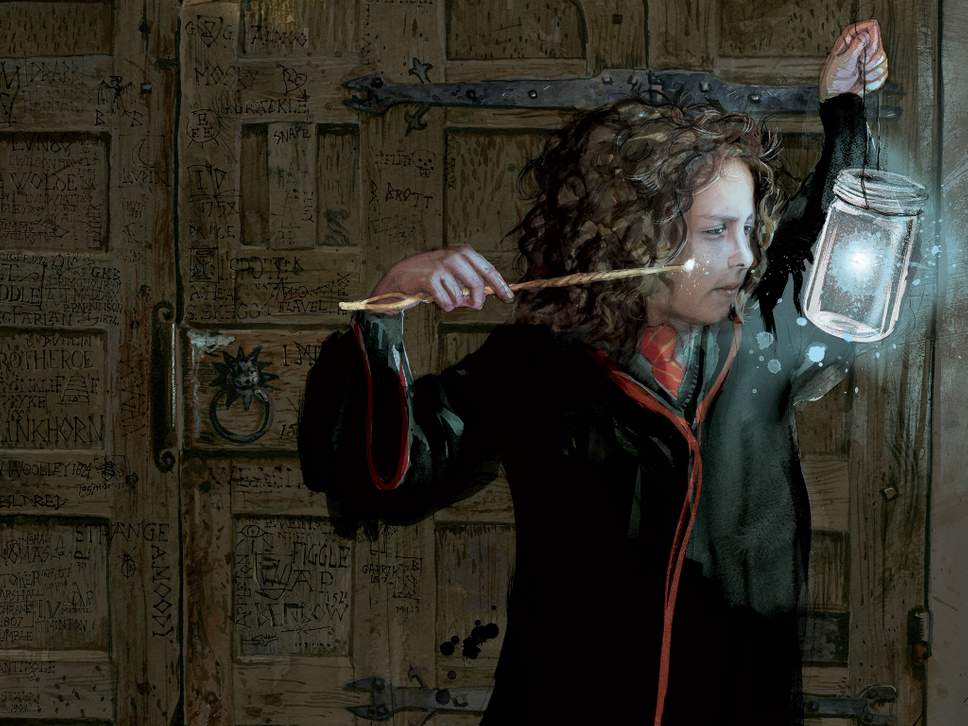
This is the second installment of the illustrated Harry Potter books. I love reading these books with my 7-year old son. They have just enough illustrations to keep him interested from page to page, especially since this is an unabridged version of the books. There are even a few extras, like this page:


Not only is it relevant to the story, but it offers a little bit of extra information for those who can't get enough of the wizarding world.

In this story, we meet new characters like Gilderoy Lockhart, the charming, narcisistic new Defense Against the Dark Arts teacher. We also get to know new places, like the whimsical Burrow, where the Weasleys call home. And there are new spells and potions to learn, central of which is the polyjuice potion, which can temporarily turn you into someone else. Of course, we also get more history into Hogwarts and the Dark Lord himself, which is so important for the books to follow.

I could read the Harry Potter books over and over, and I will definitely reach for these illustrated books for my re-reads. They are every bit as beautiful as the stories they depict, and a great addition to your library.

Saturday, February 22, 2020

The Indian in the Cupboard by Lynne Reid Banks

This was a book that my third grade teacher read to our class every day after we got in from lunch. I remember how we listened to my teacher's every word about Omri, a boy who is gifted a magical medicine cabinet that brings plastic toys to life. We couldn't wait until the next day to realize the resolution of each chapter's cliffhanger.

So it seemed a great choice to read to my 7 year old son. But would a second reading, more than 30 years later, hold up to the test of time?  I had my doubts, which began with the title of the book. Could this foreshadow greater problems to come? Against my better judgment, I decided to find out.

While my son seemed interested in the story, there were some cringey moments that maybe I was sensitive to, but hopefully were lost on him.  There were references to injuns and talk of scalpings and firewater, stereotypical stuff. And the way Little Bear spoke in broken English didn't help either. And besides all of that, Omri's friend Patrick was a terrible person. I quietly seethed through most parts of the book involving him.

So are we going to read the second book in the series? I don't think so. And while I don't think my 3rd grade psyche was damaged in any way by the first reading, I feel the book, like those memories, belongs back in the 80's.


Thursday, September 6, 2018

Harry Potter and the Sorcerer's Stone by J. K. Rowling

Can you believe the first Harry Potter book is 21 years old?!? Harry would be in his 30's by now! Hagrid would be in his 80's! A baby could have been born when the first book came out and be able to drink today! I'm amazed at how timeless and magical the books still are. And even after my having read this one 3 times and seen the movie, there are still little treasures here and there that I discover each time.

I love Rowling's characters, the world she's created, and the little life lessons peppered throughout. This book is different from the others in that we don't have a full appreciation of all the characters. Dumbledore is really absent throughout the book, more than my memory let on. And for more than half of the book, Hermione was more of an annoyance to Harry and Ron than a confidante. They don't really become close until more than halfway through the book, when a troll brokers their friendship (and we aren't talking about the trolls that roam the internets nowadays). In many ways, things were definitely in their infancy here.

This, my third reading, was devoted to my six-year old son. He's a bit green for the book (in his ability to pay attention long enough, as well as to fully appreciate a lot of the details), but I couldn't wait to expose him to this beautiful world. We spent a looooong time reading through this book, a chapter here and there, not necessarily on consecutive nights. But we got through it.


If I had any doubts that my son was too small to listen to this story, they were quickly allayed after we read chapter 12: The Mirror of Erised. Harry becomes transfixed with a mirror that shows you your heart's greatest desire, obsessively sitting in front of it nightly for hours, as it shows him his parents, long dead. I asked my son what he would see if he sat in front of the mirror and he said "I would see my great grandma, because she only got to see me when I was a baby."

Are you hearing this?!? Melted my effing heart.


The themes Rowling weave through her writing, of family, belonging, good and evil, loyalty, bravery....I could go on and on...are so deftly handled in such creative and fun ways. I am a proud Potterhead to be sure.

Another bonus with this reading is that we read the illustrated version, which is what the pictures in this post are from. It's an over-sized, unabridged hard cover version with beautiful drawings to accompany the text. If you read the book and don't think it could get any better, pick up this version and relive it all over again.

Wednesday, August 22, 2018

Every Heart a Doorway by Seanan McGuire

This is a YA novella that debuted with much acclaim and has won many awards. So of course, I didn't like it.

It was the premise that reeled me in. It's about students at a boarding school for kids who have entered and then returned from fantasy worlds. They are obsessed with returning, but have to wait for the doorway to their world to reappear. When and where it appears is different for everyone.

I like the idea that everyone has a magical door, an opportunity at some point in their lives to shed their "real" existence. For some, the door is large and obvious. For others, it's small and inconspicuous. No one knows when it will appear, or for how long. Some people never see their door. Others, like these kids, do and go through them. The world that awaits them could be one of their deepest desires, or worst nightmares. It might be a world of war or chaos. And depending on the child, that could be the best, or worst thing for them.

Some kids return from their worlds and want to forget about their experience altogether. And there are special schools for them. But others want nothing more than to return. And these are the kids at Eleanor West's Home for Wayward Children.

Do you want to know more? Me too! Do you want to know what each child's fantasy world is like? So do I! And that's the main problem I have with this book. We only catch snippets of each child's world. The entirety of the story takes place in the "real" world. And any flashbacks or descriptions McGuire gives us of someone's fantasy realm is seriously lacking.

The main mystery is that students are ending up dead at the school. So we are trying to figure out who the killer is. But I wasn't really interested in that. I guess I too, was obsessed like the kids. I just felt McGuire could have focused more on the fantasy, rather than the reality. THAT'S what I signed up for. Silly me.

I think this is one that is better in theory than execution. But plenty of people disagree with me about that. So maybe check it out? It's short at least. And it's a series. Maybe it gets better?

Friday, October 7, 2016

Harry Potter and the Cursed Child by Jack Thorne, J.K. Rowling, and John Tiffany

This is a tough one...I loved the Harry Potter books but this isn't technically an 8th book, because we all know Rowling said she was done with the books. So she came up with a new story for a theater production and the screenplay was printed in book format.


So first, let's sort out who actually wrote what. From what I can surmise, the story is a collaborative work by Rowling, Thorne, and Tiffany. But the screenplay itself was written by Jack Thorne.

So what to do. It's not technically a novel, is it? And because it's not, my expectations are slightly different, perhaps even lower. So where to start? Maybe at the beginning.

Mr. and Mrs. Dursley, of number 4, Privet Drive, were proud to say that they were perfectly normal, thank you very much. Okay, maybe we'll fast forward a bit and start at the beginning of this tale, as much as I'd like to recap all the books. Harry Potter and the Cursed Child takes place about 20 years after book 7 ends. Harry is married to Ginny and together they have 3 kids. The story focuses on Harry's middle child, Albus Severus, who is having trouble adjusting to wizarding life at Hogwarts. Of course, we learn of larger issues in the wizarding world as well. For after what seemed to be a fairly peaceful time in the wizarding world, signs of change are on the horizon. The story evolves into a complex tapestry, weaving this way and that, and even turning back on itself. This is because The Cursed Child involves time travel, which isn't my favorite story-telling device. But I was able to overlook that.

The good? Rowling was involved in writing the story. And she is great at good versus evil. The tale is strong, dark, and continues the themes of her previous books. You get Harry, Ron, Hermione, Draco, and a lot of other characters we know and love (although some just have quick cameos). She is even able to bring back some beloved characters that have not made it (at least in the world of the living) to this point, and she is able to do it organically and in a way that makes sense to the story.

The bad? It's a screenplay, so you lose a lot of the narrative and background you get with a novel. This is a huge pitfall, perhaps bordering on the ugly. Transitions that are better made in theater with music and lighting changes are not fully realized by reading the script alone. So going from scene to scene is a bit of a bumpy road. I also feel the story depends almost to a fault on the fact that you are familiar with the Potter books, While this is a bit of a given, even with the books, Rowling is able to remind us gently of certain things, either with a memory, a conversation, or a description. But with The Cursed Child, there are time and format limitations that result in certain things, like Albus' first few years at Hogwarts, for instance, being handled like a Fantasyland ride. (If you're not familiar with this story-telling device courtesy of Disneyland, it goes something like this: Snow White's Scary Adventures - quaint cottage. Snow White. Dwarves! Spooky woods. Pretty witch. A mine! Ugly witch. Scary woods. Witch at door. Dwarves!..and witch on mountain. Happy music. The end).

If you approach the Cursed Child as a Harry Potter book 8, you'll be disappointed. It will remind you of how wonderful Rowling's books were to read and made you wonder how much more information we could have obtained if this were a fully realized novel. If you approach it for what it is, a special peek into the theater production, you'll find that the show will be amazing with a lot of special effects and a fun story. I'd really only recommend the screenplay to people who don't expect to see the play but want to know the next canonical story in the Potterverse. For everyone else, I'd suggest seeing the play instead.


Saturday, August 30, 2014

The Fault in Our Stars by John Green


I reluctantly put this book on hold at the library more out of a sense of duty as a book blogger, rather than a real desire to read it. Much like my 9 year old niece's attitude to the Harry Potter series, I was reluctant to grab my board and join the wave of popularity that surrounded this book (my niece is totally wrong, by the way, but that doesn't mean I am).

I was something like 116th in line at the library. So I figured I wouldn't get my hands on it for at least 10 years. Since I'd heard so many good things about it, I was prepared to be disappointed by the hype anyway and felt I could afford to wait. But damn it if it didn't come just a few months later. Stupid public libraries with half decent book selections and somewhat plentiful stock.

The story is straightforward. Hazel has cancer and lives her life despite cancer's life interrupting side effects like exhaustion, hospital stays, oh, and death. In addition to the cancer, she deals with things like overly loving parents and support group, which she attends more for her parents' benefit than her own. At support group, she meets Augustus, a cancer survivor, and they soon become friends. Okay, they become more than friends eventually, but somehow the word "boyfriend" seems to cheapen their relationship.

Hazel introduces Augustus to her favorite book, An Imperial Affliction, written by Peter van Houten. Hazel obsesses over the ending of the book, which follows a vein similar to The Sopranos' Finale. Hazel writes van Houten seeking answers to the fates of the book's characters. But her letters seem ignored, until Augustus writes van Houten...and gets a response.

I'd say more, but it really isn't the story itself that is the main draw for me with this book. It's the writing.  Green's narrative had me smiling from the first few pages. Hazel and Augustus are both smart, sharp, and funny. I liked seeing the world through Hazel's eyes, especially. I suppose even without the great writing, Hazel and Augustus' search for answers from van Houten was intriguing enough. But what brings this book from three stars to four is Green's fresh and fun writing.


Saturday, January 11, 2014

The Maze Runner Series (books 1-3) by James Dashner


**No more spoilers given than what is published to advertise each book**


Thomas wakes up one day to find himself in a field with other boys surrounding him.  He has no memory of who he is or how he got there.  Same as the others before him.  He soon learns he is trapped in a maze and joins their quest to find a way out.


This series starts as many YA series do.  Strong, compelling, slightly twisted.  But by book three, I find myself back to 2006, watching the third season of LOST - frusterated, confused, and less willing to believe.

The maze runner was good, if not a bit strange.  Thomas becomes a "runner," or one of the boys whose role is to map out the constantly changing maze and try to find a way to solve it.  The entire first book is consumed by the maze itself and the boys' lives therein.  My questions are the same as the boys'.  Why?  Where?  What caused this?  What is going on in the rest of the world?  But because they have no memory and I don't really know when this takes place or in what kind of world, I am along for the ride.  Dashner ends the book strongly - with a promise of answers to many, if not all, of my questions.  Ok, I say, I can continue down this rabbit hole with you.

So I pick up book two.  Here's where we get into season two of LOST.  I'm invested in these characters, I understand the premise, and I like it.  Yeah, there are some strange things that happen, but I'm willing to trust Dashner and see how he'll tie everything together in the end.  Ok, maybe this book isn't quite as good as the first...but we're building to something here.  I can feel it.

Without giving too much away, book two places Thomas and the other boys, or "The Gladers" as they've called themselves, into the "Scorch," which is basically the desert.  And here's where the series evolves into basically a zombie tale (no complaints yet).  The Gladers have learned they are a part of a special group undergoing trials in order to hopefully effect a cure for the condition of the world today.  Just as a drug undergoes trials in testing, the Gladers, quite literally, are enduring their course of trials.

This second book has a bit more teenage angst and drama, which I feel just meh about.  Thankfully Dashner keeps things platonic and the drama more on an emotional level, which I think is fair.  I'm more interested in how jacked up everything has become and why.  But do I get many answers?  No.  Just more questions.  Well, I'm already invested.  Might as well pick up book three.

Book three picks up the pace.  Answers begin to come.  But the more I understand what is going on, the more I realize how everything in the previous two books was kinda meaningless, subplots within the grand scheme of things,  I guess.  Are the Gladers really accomplishing anything?  Or are they literally just running around for no good?  Dashner puts in details that seem so important at the time but become forgotten as the series evolves.  Is it poor planning?  Did he abandon those ideas?  I start to get ambivalent.  I start to think Dashner has made more happen than he's going to explain.  I can't decide if I like the series or feel jilted by it.  I look at the book like an old lover.  Do I keep you in bed with me?  Or throw you across the room?

After much frustration and some eye rolling, I've finished.  (In case you're wondering, I'm not still using the jilted lover parallel here.)  I like the ending, in all, an interesting series.  There is a fourth book, a prequel.  Will I read it?  Probably.

So it's a mixed recommend.  Definitely something different with its ups and downs, but Dashner has managed to keep me interested and feeling...something...while I read.  I suppose that's the point.

And for you lazies who like the on screen version, I hear this book has a movie in post production, scheduled to be released this fall.  Should make for a great movie.

Saturday, March 10, 2012

Miss Peregrine's Home for Peculiar Children by Ransom Riggs

I've said it before and I'll say it again, kids are creepy. What can take a horror movie to the next level? A creepy kid. Remember the kids in The Shining? That boy who would make his finger talk and say "redrum" over and over? Or those twin girls? What about The Others? Or The Sixth Sense? Or all those other movies I haven't seen because they have creepy kids in them and I'm too scared to watch them? Who doesn't agree that dolls are creepy? And why were garbage pail kids so popular back in the day? Creepy kids. Has anyone seen the teletubbies? Weirdest shit I'd ever seen.

Having said all that, what drew me to this book was the eerie picture of a girl floating on the cover. The picture looks real, and it looks old. Which brings me to another creepy device...old stuff. And this is a black and white photo, so it's old. At least, it looks old. After I did some asking around, I realized the book's premise is based on several photos that the author obtained. They are an eclectic bunch of pictures, many of which involve amateur photo tricks like the picture of the girl floating on the cover. Some of the photos don't involve any kind of trick, per se, but they're just strange, out of context images. And a lot of them involve kids. Creepy kids. Riggs uses these photos as inspiration for his story, and every now and then, he'll describe a character or a scene, and voila! On the next page is a picture of just what he is describing.

So what's the deal? The story is about Jacob, a teenager who has grown up hearing strange stories from his grandfather, who fled to Wales during WWII. His grandfather grows up in a home with other children, who are all special in some way. Set in modern times, Jacob finds himself delving into his grandfather's past and visiting the orphanage to better understand the strange tales he heard growing up. Although the orphanage and its inhabitants are from the 1940's, Jacob finds a way to connect with his grandfather's past.

It's difficult to get more detailed without giving anything away. But the book is basically a mix of X-Men/sci-fi/fantasy all in one. My reaction to the book was a little mixed...as it is with creepy kids in general. I'm a bit put off, but intrigued at the same time. Although I was more intrigued than put off in this case. I felt the incorporation of the photos was creative, but contrived at times. I could see the author thinking, "How do I get this photo into my narrative?" and then making up a random scene just to make it work. That took me out of the story a couple of times, but I was still excited to see what photo would be next and it definitely made the tale more visual for me. The story definitely fits a young adult genre though, which I find (except in a few cases) can dilute the potential of a story (if that makes any sense to anyone other than myself).

I agree with many others who have reviewed this book - the pictures are creepier than the story itself; and the tale is somewhat immature and underdeveloped. But despite the mixed feelings, if you like fantasy stories or are a YA fan, you may get a kick out of this one.

Monday, January 9, 2012

Beautiful Creatures by Kami Garcia and Margaret Stohl (CBR book #31)


If you're into Twilight or other angsty teenage supernatural type books, then you'll probably dig Beautiful Creatures. Now that I've mentioned Twilight, some of you die-hard fans (I am not one of them) might want to know which is better...honestly, I'm not sure. I think Twilight fans would still prefer the Twilight books to Beautiful Creatures, but with three books already in the series, Beautiful Creatures may be worth a deeper look.

Okay, now I'm talking to normal people. This book is along the lines of the Twilight series so...possibly an entertaining, brainless read with a cup of annoying and over dramatic mixed in.

Basically, Beautiful Creatures takes place in the small town of Gatlin, South Carolina, where the civil war is still the biggest news of the day. Ethan Wate, a sophomore in high school, has his friends and basketball team. But then Lena Duchannes comes to town. The niece of the town's mysterious recluse, Lena's welcome in Gatlin is anything but. Ethan, however, is strangely drawn to Lena. Haunted by a recurring dream, Lena seems to be the clue to Ethan understanding it. As their friendship develops, Ethan learns more and more about Lena's family and all of its supernatural secrets.

I think this story focuses more on the relationship between Ethan and Lena (read: a love story) as opposed to really exploring and understanding Lena's supernatural world. In that sense, I found the book lacking. I love being immersed in new worlds but the perspective is Ethan's, so you feel just as in the dark as he does about all the interesting things Lena is privy to. Of course, things are slowly revealed throughout the book, but I still had a lot of questions and wanted to know more. I suppose that's the point of a series though, isn't it? Perhaps I'll read the second book to discover more. But I'm not sure the first book entranced me enough to go to the trouble.

Friday, December 9, 2011

The Book of Lost Things by John Connolly (CBR book #29)

Fairy tales are everywhere. I just got back from Disneyworld where Cinderella Castle stands prominently at center stage. And of course there's the classic Disney ride, Snow White's Scary Adventures (although I heard the Magic Kingdom in Florida is axing Snow White in a year or two. How sad.).

There is also a more modern emergence of fairly tales on network TV. Shows like Grimm and Once Upon a Time peaked my interest, until I started watching them.

So it makes sense that I turned my attention to a different, and more traditional genre for my fairy tale fix, books. The Book of Lost Things by John Connolly was written in 2006 and is a departure for the author, who normally writes thriller novels. I've read mixed reviews about his experiment and must say, I agree to some extent with everyone.

Our story takes place during WWII in London. David's mother has died. His father remarries a woman named Rose, and the three move into Rose's family home. Soon after, Rose gives birth to a son. As David feels more and more isolated and forgotten, his grip on reality slowly slips. He suffers seizures, hears books whispering to him, and begins seeing The Crooked Man. One night, he hears his mother calling to him, and David follows her voice to a sunken garden. As the war rages around him, a German bomber plane goes down, heading for the garden. David hides in a crack in the garden, where is he transported to another world.

In this new world, David begins a quest to find the king, whose Book of Lost Things may hold the key to David's return home. Along the way, David quickly learns he is in a land where fairy tales are real. But unlike the the sanitized versions Disney would offer, Connolly's version of our favorite stories is more along the lines of the inspiration followed by the Brother's Grimm. The stories Connolly tells through David's adventures deal with issues like bestiality, homosexuality, and murder for sport, to name a few. And they involve familiar characters like Red Riding Hood, Snow White, Rumplestiltskin, and some new ones as well.

So why the mixed reviews? My biggest issue with the book is that there is something in the way Connolly writes that makes The Book of Lost Things seem like a young adult book. Maybe it's his writing style. Maybe it's the fact that the main character is a twelve year old boy...I can't really place my finger on it. But the stories Connolly tells are more suited for an adult audience. There is overt sexuality and violence that wouldn't have shocked me as much, had I not felt like the book was a YA novel. I was confused by the two voices which clashed, rather than blended.

With that said, it's a damn interesting book. A little slow in the beginning, but a great fantasy novel. And I'm a sucker for good endings. I can forgive a lot in a book if the ending is satisfying, and this one delivered for me.

So if you like fairy tales, fantasy stories, and a bit of the macabre, it's a recommend. Oooh, and while we're on the subject...despite Disney's abandonment of her, Snow White lives on in theaters next year. I can't wait to see the two versions coming out! Click here for the trailer of Snow White and the Huntsman with Charlize Theron, Kristen Stewart, and Chris Hemsworth. And the trailer for the campier looking Mirror Mirror with Julia Roberts is here.

Sunday, May 1, 2011

The Dark and Hollow Places by Carrie Ryan (CBR book #10)

I loved the first book and liked the second...so what is in store for this, the third installment of the Forest of Hands and Teeth series? Be warned, if you haven't read any of the books (1, 2, or 3) this review contains mild spoilers. I won't reveal anything major, but a lot of information about the character's relationships is discussed.

Let's start with the plusses (which, yes, means there are some minuses). First of all, I like book 3's narrator, Annah, whose voice is the strongest of Carrie Ryan's three protagonists. Annah is tough, fierce, determined, but also vulnerable. Her life - complex. She is the daughter of Mary (book 1's narrator), sister to Gabry (book 2's narrator), and friend to Elias, (who fell in love with Gabry in book 2). Unlike Mary and Gabry, Annah has learned to take care of herself and lives an isolated life. After she is reunited with Elias and Gabry, Annah struggles to deal with her feelings for them. Annah also meets Catcher, who, like Elias, seems impossible to get close to. And with Annah's mixed feelings for Gabry, Annah struggles to find her place in this strange group, living in a city that now seems to be the last hope for human-kind.

If this sounds too much like a soap opera, well, it kinda is. Which brings me to a minus. There is an element of teenage angst (a criticism I had for the second book), but it IS a young adult book so I guess that's understandable. Another criticism I have (and again I had with book 2) is that there is a lot of running away from the zombies. In books one and two it was through the path in the forest. In book three, it's through city tunnels.

Another big minus for this book, and the series as a whole, is that Ryan completely drops Mary from book three. There is maybe one sentence about how she went to another city and that's it. What about all the build up from book 2 about the pages that Gabry risked herself to save? What about the mystery surrounding the origin of The Return and Mary's little village? I was REALLY disappointed by this HUGE omission.

But, in the form of any good compliment sandwich, I will end on a good note. Ryan's concept of The Sanctuary is perplexing and disturbing. The zombies have breached The Dark City and Annah, Elias, Gabry, and Catcher have made passage to what now seems to be the last hope for humanity. But Annah quickly learns that life without zombies isn't necessarily a life worth living. And the brand of hope The Sanctuary provides isn't necessarily her idea of humanity at its best.

It's these contradictions that make this book good, but you have to dig through some fluff to get there.

Saturday, February 19, 2011

Ender's Game by Orson Scott Card (CBR III book #6)

How can a book about ant-aliens and ten year old space commanders make its way onto my bookshelf? I had been on a young adult kick for awhile but most of the books I had read were about young women, with angsty love stories worked in their plots.

Ender's Game was recommended by a friend who bought it for me for Christmas. Unlike my previous YA books, this one is more geared toward the young boy demographic. And now that I think about it, there's probably only one big female character of note in the book. No sir, there are no girls allowed here! This book is full of war games, soldier school, aliens, fights, and definitely no heart to heart talks. Very boy-like indeed.

Basically, Ender is a young boy living in a futuristic society. Life on other planets has been discovered, inter-stellar travel is somewhat normal, and boys (and some girls) can go to school in space to train to be soldiers. This final point is necessitated by the fact that Earth faces the threat of annihilation by an alien ant-like species lovingly termed "buggers." Okay, stay with me on this one, it gets better, really.

Ender has been chosen to attend this school and is being groomed to command an army. Most of the book covers Ender's time at the battle school, particularly the war games the boys play as a part of their training. Even though this is a book for boys, there is no lack of drama at the war school. But instead of he said/he said gossip and bitch slapping, there is more snubbing at lunch tables and trash talking and even a naked shower fight. Hmmm, maybe boys and girls aren't that different after all?

Anywho, I was about two thirds of the way through the book and over the battle school when things really picked up. I'm not just talking about the action getting better, or the setting changing sort of thing. I'm talking about the author throws you for a loop and the book takes on a whole new meaning and I'm suddenly engrossed in a really philosophical, thought-provoking story. In fact, I went from "I'm just trying to finish this damn book" to "holy moly I can't put it down!"

Unfortunately I can't really elaborate without spoiling anything so you'll just have to take my word for it. Overall, it's a mixed review. I think there's a real treat in this book for whoever picks it up. But if you're not into sci-fi/wargames type of stuff, you might have to tolerate two hundred pages before getting there.


Sunday, January 23, 2011

Mockingjay by Suzanne Collins (CBR III Book #4)

There must be some kind of corollary to Murphy's Law which states that when you go into something with low expectations, you won't be disappointed, and vice versa. Since I'm one of the last of my friends to read this book, I had the benefit (?) of their opinions, which were actually mostly a bit disappointed. But anyone who's read the Hunger Games books knows you HAVE to read Mockingjay, no matter what anyone tells you about it, and I'm glad I did.

*note* This review is written more for people who have already read the book, so there are spoilers ahead. I won't bother recapping the first two books. If you haven't read them, I highly recommend the series but suggest starting with The Hunger Games. For a review of the first book in the series, click here.

In Mockingjay, Collins basically keeps the Hunger Games going, except she loses the arena and the limited number of players. The Hunger Games is now everywhere and has become everyone's reality. And it doesn't get any easier for Katniss, who finds herself the reluctant face of the resistance.

Instead of Snow, this time Katniss is being used by Coin for her own purposes. Purposes which may or may not overlap with Katniss' own desires. Instead of having a team of stylists, Katniss' outward appearance (despite her inward struggles and demons) is made acceptable by a small film crew shooting propoganda pieces for the resistance. And Katniss continues to struggle with her own identity. Is she of any value to the resistance? To Peeta or Gale? Does her life have any meaning beyond her role in the civil war and her ultimate goal, which is not to serve the resistance, but to kill Snow?

I thought Collins did a great job of showing how truly innocent, good people, can become completely changed by life's events. Katniss and Peeta are hardly the same people they were in the first book. You see their tragic evolution from unblemished to completely destroyed, both physically and emotionally. Then there are character's like Haymitch, who you only know after the Hunger Games has changed him. After my journey with Katniss, however, by the time I finished the book, I was forgiving of Haymitch for his alcohol abuse and almost understanding. In fact, if Katniss had decided to become an alcoholic, I can't say I'd blame her.

I also liked how Collins kept Katniss strong, but not infallible. She was a reluctant Mockingjay, she was motivated by hate and revenge, and she voted to hold another Hunger Games. True to life, Collins doesn't provide much explanation for some of Katniss' actions. You just have to guess as to why she does certain things.

Then there's the issue of who Katniss ultimately chose to spend the rest of her life with. How much of it was choice and how much was circumstance? What if Peeta had not gone back to 12 and Gale had? Did she choose Peeta because of the pain they shared? Sure, they had both been subject to horrifying events, but could Katniss truly understand Peeta's point of view, or he hers? Did Katniss blame Gale for the death of her sister? Was that more unforgivable to her than anything Peeta had done? And did Katniss choose Peeta because she loved him, or did she grow to love him after making her choice?

Maybe the answers to these questions are not what's important...maybe some of life's questions can never be answered...and maybe that's okay. Because as Peeta and Katniss have learned, there can be a fine line between what's real and what's not real. The thin thread that holds our lives together can be easily broken by things like excess, fear, hate, and war. But holding fast to simple truths like loyalty, patience, and hope is what kept Katniss, and can keep all of us going.